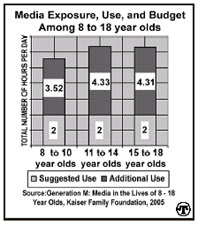
Take Action for Turnoff Week 2008 – April 21-27, 2008  Every day, children ages eight to 18 spend more than six hours watching TV, playing video games or using the computer for recreational purposes. The more time youth spend in front of the screen, the more likely they are to be overweight. Turnoff Week, April 21-27, is an excellent time to start limiting recreational screen time and boosting physical activity and healthier living. Every day, children ages eight to 18 spend more than six hours watching TV, playing video games or using the computer for recreational purposes. The more time youth spend in front of the screen, the more likely they are to be overweight. Turnoff Week, April 21-27, is an excellent time to start limiting recreational screen time and boosting physical activity and healthier living.
“We know that the more time a child spends in front of the TV or computer, the more likely he or she is to be overweight,” said Acting U.S. Surgeon General Rear Admiral Steven K. Galson, M.D., M.P.H. “Kids are spending more time sitting in front of screens every day than they do anything else except perhaps sleeping. For Turnoff Week, parents were asked to turn off the screens and get active with their kids.” Join We Can!™ and the Center for SCREEN-TIME Awareness in celebrating family, healthy living, and an exploration of all that is going on around us as we focus our attention on reducing the impact of the screens in our lives during Turnoff Week 2008. To help families make these important lifestyle changes, the We Can!™ program offers sensible, evidence-based guidance and tips for parents to help them not only reduce screen time, but also to encourage physical activity and better nutrition choices.
Use Resources from We Can!™ to Share with Parents Here are the resources that you can use while planning and conducting activities during Turnoff Week 2008: - Order the We Can!™ Parent Handbooksat English – Spanish –
- Order the We Can!™ Parent Program Leader’s Guide Don’t Miss We Can! ™ Help Children Reduce Screen Time on pages 130-131.
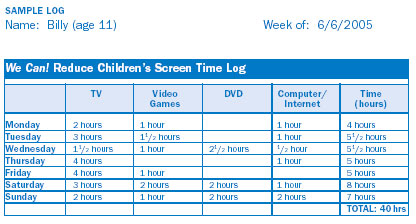
- Download the We Can! ™ Reduce Children’s Screen Time Log at http://www.nhlbi.nih.gov/health/public/heart/obesity/wecan/downloads/screen-time-log.pdf
- Check out more information about the Student Media Awareness to Reduce Television (S.M.A.R.T.) Curriculum for Youth – See Lessons 12 & 13 for ways to reduce screen time during summer break
|
 Share We Can! ™ Resources with Local Media Share We Can! ™ Resources with Local Media
- Utilize video messages and sound bites from the Acting Surgeon General on reducing screen time
http://www.nhlbi.nih.gov/health/public/heart/obesity/wecan/
news/event03.htm - Distribute Matte Articles
- “Less TV, Fewer Videos Help Keep Weight in Check” (English & Spanish) available at http://www.nhlbi.nih.gov/health/public/heart/obesity/wecan/
downloads/matte3.pdf - "Pointers for Parents: More Screen Time Equals Less Activity Time” available at http://www.nhlbi.nih.gov/health/public/heart/obesity/wecan/
downloads/matte4.pdf We Can!™ is a trademark of the DHHS.
HIN0408WECAN |
|