| Taking control of sickle cell disease: A century of progress One hundred years ago, physician James Herrick published a description of oddly-shaped blood cells taken from dental student Walter Clement Noel. His report of "thin, elongated, sickle-shaped and crescent-shaped forms" was the first record in Western medical literature of what came to be known as sickle cell disease. As recently as the early 1970s, individuals with this inherited condition could only expect to live into their teens. Today, thanks to research and medical advances that have led to effective approaches to manage symptoms and prevent complications, individuals with sickle cell disease are living into their 40s, 50s, and beyond. 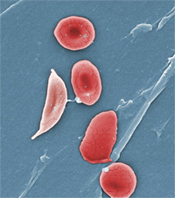 Sickle cell disease basics Sickle cell disease basics
Normal, healthy red blood cells look like donuts without the hole in the middle. They are round and flexible, and move easily through blood vessels to deliver oxygen and nutrients throughout the body. In sickle cell disease, also known as sickle cell anemia, the body makes sickle-shaped red blood cells that are rigid and sticky. These deformed, crescent-shaped cells wreak havoc in the body. They can form clumps that block blood flow, leading to serious infections, anemia, and damage to major organs such as the brain and lungs. While sickle cell disease currently has no widely available cure, treatments can help relieve pain; prevent infections, eye damage, and strokes; and control complications. Learn more about sickle cell disease Taking control of sickle cell disease Sudden pain throughout the body is a common symptom of sickle cell disease. This pain is commonly called a "sickle cell crisis" and occurs when sickled red blood cells form clumps in the bloodstream. The clumps block blood flow through the small blood vessels in the limbs and organs, and can cause pain and organ damage. Some people have crises less than once a year, while others may experience 15 or more crises in a year. Pain crises are due to a number of factors and knowing how to avoid or control them can help individuals manage their pain. If you have sickle cell disease, or know someone who does, take time to learn about the disease and how to manage it.  | Steps to prevent and control complications: - Drink plenty of fluids, as the risk for a sickle cell crisis increases if you're dehydrated.
- Avoid decongestants, such as pseudoephedrine. These medicines can tighten blood vessels and further prevent red blood cells from moving smoothly through the vessels.
- Avoid extremes of heat and cold. Wear warm clothes outside in cold weather and inside of air-conditioned rooms. Don't swim in cold water or climb at high altitudes without extra oxygen.
|
- Reduce the stress in your life. Support from family and friends as well as a support group can help you cope with daily life.
- If possible, avoid jobs that require a lot of physical labor, expose you to extremes of heat and cold, or involve long work hours.
- Don't travel in airplanes where the cabins aren't pressurized. If you must travel in such an airplane, talk to your doctor about how to protect yourself.
- Get a flu shot and other vaccines to prevent infections.
- See your dentist regularly to prevent infections and loss of teeth.
- Get regular medical checkups.
- Learn the signs and symptoms of a stroke. They include a lasting headache, weakness on one side of the body, limping, and sudden changes in speech, vision, or hearing. If you have any of these symptoms, report them to your doctor promptly.
- Get treatment and control any other medical conditions you have, such as diabetes.
Learn more about taking control of sickle cell disease Looking forward: Life beyond sickle cell disease We now have effective approaches to prevent and treat complications of sickle cell disease. The NHLBI continues to look ahead to find new and better treatments. The Institute is supporting basic, clinical, and translational research on sickle cell disease, including research on transplantation of blood-forming stem cells, gene therapy, new treatments for pain, optimal uses of blood transfusion, and management of iron overload related to blood transfusions. The NHLBI also is leading an effort to develop evidence-based clinical practice guidelines for the care of people who have sickle cell disease, and to launch a public awareness and education campaign to focus nationwide attention on sickle cell disease as a serious public health issue. Patients, families, practitioners, and communities are encouraged to become actively engaged in improving the lives of persons affected by sickle cell disease. Get involved - Clinical trials
The participation of individuals in clinical trials has been essential for the development of new treatments. There are a large number of ongoing studies on sickle cell disease and related disorders across the country and around the world. For information, visit http://www.clinicaltrials.gov/ and search on terms such as 'sickle.'
- James B. Herrick Symposium
The James B. Herrick Symposium- Sickle Cell Disease Care and Research: Past, Present, and Future, will be held on the National Institutes of Health main campus in Bethesda, Maryland on November 16-17, 2010. Scientists, practitioners, academicians, members of the sickle cell community and the public are invited to attend.
- Test your knowledge: Take the sickle cell anemia quiz
- Scan a list of organizations that focus on blood diseases and resources
|