| Varicose Vein FAQs 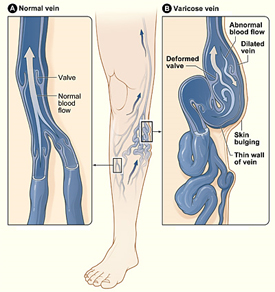 You have an amazing network of nearly 60,000 miles of blood vessels throughout your body. Your arteries carry blood away from your heart out towards the tissues. They branch into smaller arterioles, which branch into even smaller microscopic capillaries. In the capillaries, oxygen and nutrients are exchanged in your brain, kidneys, lungs, muscles, and other tissues. The capillaries join together and connect the arterioles and venules. The small venules return the blood to the large veins. The veins carry blood from your tissues back to your heart to start circulation over again. You have an amazing network of nearly 60,000 miles of blood vessels throughout your body. Your arteries carry blood away from your heart out towards the tissues. They branch into smaller arterioles, which branch into even smaller microscopic capillaries. In the capillaries, oxygen and nutrients are exchanged in your brain, kidneys, lungs, muscles, and other tissues. The capillaries join together and connect the arterioles and venules. The small venules return the blood to the large veins. The veins carry blood from your tissues back to your heart to start circulation over again.
You might not pay much attention to this incredible network of tubes until you notice them below the surface of your skin, perhaps in the form of varicose veins or spider veins. What are varicose veins? Veins have one-way valves that help keep blood flowing toward your heart. If your valves are weak or damaged, blood can back up and pool in your veins. This causes the veins to swell and can lead to varicose veins. These swollen, twisted veins can be seen just under the surface of the skin. Varicose veins usually occur in the legs; however, they can also form in other parts of your body. Spider veins are a smaller version of varicose veins and involve the capillaries. They often show up on the legs and face, usually look like a spider web or tree branch, and can be red or blue. Learn more about varicose veins What increases my risk of getting varicose veins? A number of factors may increase your risk for varicose veins. - Family History: Having family members who have varicose veins may raise your risk. About half of all people who have varicose veins have a family history of them.
- Age: The normal wear and tear of aging may cause the valves in your veins to weaken and not work as well.
- Gender: Women tend to get varicose veins more often than men. Hormonal changes that occur during puberty, pregnancy, menopause, or with the use of birth control pills, may raise a woman's chances of getting varicose veins.
- Pregnancy: During pregnancy, the growing fetus puts pressure on the veins in the legs. Varicose veins that occur during pregnancy usually get better within 3 to 12 months of delivery.
- Overweight or obesity:Being overweight or obese can put extra pressure on your veins, which can lead to varicose veins.
- Lack of movement:Standing or sitting for a long time, especially with your legs bent or crossed, may raise your risk for varicose veins. This is because staying in one position for a long time may force your veins to work harder to pump blood to your heart.
How can I prevent varicose veins? You can't prevent varicose veins from forming. However, you can prevent the ones you have from getting worse, reduce pain, and delay other varicose veins from forming with simple lifestyle changes. These include: - Avoid standing or sitting for long periods without taking a break. When sitting, avoid crossing your legs. Raise your legs when sitting, resting, or sleeping. When you can, raise your legs above the level of your heart.
- Do physical activities to get your legs moving and improve muscle tone. This helps blood move through your veins.
- If you're overweight or obese, lose weight. This will improve blood flow and ease the pressure on your veins.
- Avoid wearing tight clothes, especially those that are tight around your waist, groin area (upper thighs), and legs. Tight clothes can make varicose veins worse.
- Avoid wearing high heels for long periods. Lower heeled shoes can help tone your calf muscles. Toned muscles help blood move through the veins.
- Wear compression stockings if your doctor advises you to. These stockings create gentle pressure up the leg. This pressure keeps blood from pooling in the veins and decreases swelling in the legs.
How are varicose veins treated? Varicose veins are treated with lifestyle changes and medical procedures. The goals of treatment are to relieve symptoms, prevent complications, and improve appearance. If your varicose veins cause few symptoms, your doctor may suggest making some of the simple lifestyle changes listed above to prevent varicose veins. If your symptoms are more severe (significant pain, blood clots, or skin disorders) your doctor may recommend one or more medical procedures. Although treatment can help existing varicose veins, it can't prevent new ones from forming. Medical procedures are done either to remove varicose veins or to close them. Some common procedures include sclerotherapy, microsclerotherapy, laser surgery, endovenous ablation therapy, endoscopic vein surgery, ambulatory phlebectomy, and vein stripping and ligation. Learn more about treatments for varicose veins Popular related resources - NHLBI Diseases and Conditions Index: Varicose Veins (en español)
- NHLBI Diseases and Conditions Index: How the Heart Works
- Your Guide to Physical Activity and Your Heart
|