| Heart Healthy Grilling Tips and Recipes 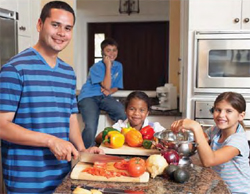 Healthy eating can help lower your risk for heart disease and other conditions. One way to prepare healthy food is by grilling. Vegetables, seafood, lean meats, poultry, and even some fruits grill beautifully. Here are some basic grilling guidelines to help you get fired up. Healthy eating can help lower your risk for heart disease and other conditions. One way to prepare healthy food is by grilling. Vegetables, seafood, lean meats, poultry, and even some fruits grill beautifully. Here are some basic grilling guidelines to help you get fired up.
To learn more, visit the Keep the Beat™: Deliciously Healthy Eating Web site. Chicken. Spray nonstick cooking spray on a grill pan or on grill racks. Preheat the grill pan, or start the gas or charcoal grill. Place chicken on the grill and cook 12–15 minutes per 4–5 ounces, flipping once halfway through. Chicken should be cooked to a minimum internal temperature of 165 °F. Fish fillets, steaks, or kabobs. Choose firm seafood such as tuna, salmon, halibut, grouper, or trout. Grill on medium heat for 7–9 minutes per ½-inch thickness, until the flesh is opaque and separates easily with a fork (to a minimum internal temperature of 145 °F). Vegetables. Rinse, trim, and cut up vegetables. Use a grill basket or grill on top of foil to prevent the smaller pieces from falling through the grill. Approximate cooking times for select vegetables: - Corn on the cob: 25–30 minutes
- Eggplant: 8 minutes
- Sweet peppers: 8–10 minutes
- Tomatoes: 5 minutes
- Zucchini/squash: 5–6 minutes
Do you have budding chefs in your household?
There are many ways to engage your children in food preparation and cooking. While grocery shopping, invite your children to help pick out vegetables to try for grilling. Younger children can help wash veggies, and older children can help thread food onto skewers for kabobs. Explore more tips to get your children involved in the kitchen.
Popular Heart Healthy Recipes 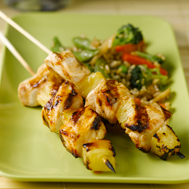 Mediterranean Kabobs Mediterranean Kabobs
Hawaiian Huli Huli Chicken (shown) Grilled Tuna With Chickpea and Spinach Salad Grilled Romaine Lettuce With Caesar Dressing Turkey Club Burger
Food Safety Make sure you cook and keep foods at the correct temperature to ensure food safety. Bacteria can grow in foods between 41 °F and 135 °F. To keep foods out of this danger zone, keep cold foods cold and hot foods hot. 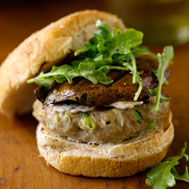 Safety reminders: Safety reminders:
- Immediately clean countertops, cutting boards, knives, and other items that have been in contact with raw meat or eggs.
- Don't put cooked food on a plate or surface that previously had raw meat.
- Wash utensils and brushes immediately after touching raw meat.
- Before cooking, roll up your sleeves. Loose-fitting clothing can catch on fire. When touching or moving anything hot, wear oven mitts.
- Use a clean food thermometer and measure the internal temperature of cooked food to make sure meat, poultry, and egg dishes are cooked to the proper temperatures.
Get more tips to keep your kitchen safe.
Popular Resources 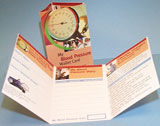 My Blood Pressure Wallet Card (shown) My Blood Pressure Wallet Card (shown)
This handy card helps you monitor your blood pressure readings, remember to take medications, and be mindful of lifestyle changes that can reduce high blood pressure.
Diseases and Conditions Index (DCI): Metabolic Syndrome
Metabolic syndrome is the name for a group of risk factors that raise your risk for heart disease and other health problems. At-A-Glance: Physical Activity and Your Heart
This easy-to-read fact sheet provides an overview of the benefits of physical activity, along with tips for getting started and staying active.
News and Events NIH stops clinical trial on combination cholesterol treatment — Lack of efficacy in reducing cardiovascular events prompts decision
The NHLBI has stopped a clinical trial studying a blood lipid treatment 18 months earlier than planned. The trial found that adding high dose, extended-release niacin to statin treatment in people with heart and vascular disease, did not reduce the risk of cardiovascular events, including heart attacks and stroke. Participants in the study were at risk for cardiovascular events despite having well-controlled low-density lipoprotein (LDL or bad cholesterol). Do not be alarmed if you take prescription drugs or multivitamins that contain niacin. Instead, talk with your primary care doctor or cardiologist before making any changes to your treatments or use of supplements. The dose of niacin in this study was much greater than the amount found in typical multivitamins and prescription medications. In addition, these results do not apply to people who take statins to control cholesterol.
Read more about the study. E-Mail Updates From the NHLBI
The NHLBI now offers free e-mail alerts about the latest NHLBI research news, funding opportunities, and updates from the Director's office. ™ Keep the Beat is a trademark of the U.S. Department of Health and Human Services (HHS).
|