| Patient voices: Life with sickle cell disease 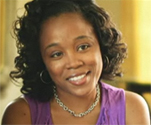 "I have sickle cell, but sickle cell doesn't have me." —Tiffany McCoy "I have sickle cell, but sickle cell doesn't have me." —Tiffany McCoy
In 1910, physician James Herrick published an unusual laboratory finding from blood drawn from one of his patients, Walter Clement Noel. While healthy red blood cells look like doughnuts without a hole, Mr. Noel's cells were misshapen. "The shape of the reds was very irregular, but what especially attracted attention was the large number of thin, elongated, sickle-shaped and crescent-shaped forms," Dr. Herrick wrote. His report was the first record in Western medical literature of what has come to be known as sickle cell disease. Sickle cell disease is an inherited condition that affects between 70,000 and 100,000 people in the United States, the majority of whom are of African or Hispanic descent. Members of the sickle cell community, scientists, practitioners, and the public came together at a symposium in November to mark the 100th anniversary of Dr. Herrick's discovery. They looked back at the history and societal impact of the disease, and looked forward to the unresolved challenges and possible future treatments. Here are a few of the voices of sickle cell disease from the symposium. Tiffany McCoy: Living with sickle cell disease "The doctors told my parents that I probably wouldn't live to see my 18th birthday. Sickle cell was like a death sentence, but now it's totally the opposite. I mean, people can live effective, prosperous lives, healthy lives with sickle cell disease, so I think that we've come a long way. "A crisis is the hallmark of sickle cell disease, and a crisis is just pain. In any location of your body, you can have it wherever blood flows. If I had to describe it, it would be repeatedly like being stabbed with a butcher knife in the same spot, nonstop. That's what it feels like… "I started taking hydroxyurea May 2009, and it has really, really changed my life! I haven't had an admission in 13 months. And my numbers, my blood numbers are wonderful, my doctor is totally pleased with it, I haven't had any negative side effect from the medicine, it's really wonderful. It's been good to me. "It feels great to know that, yes, when my parents told me I could do whatever I wanted to do and be whoever I wanted to be, that I am actually doing it now. "Having a good attitude affects any area of your life, whether it's health-related or job-related, or any area of your life. So I always try my best to have a good outlook on life." Watch Tiffany tell her story of living with sickle cell disease in this compelling short video. 100 years of progress in sickle cell research and care "I have made hundreds of trips to the hospital in the middle of the night in Cleveland, Boston, and Baltimore to see my patients, often writhing in pain, in septic shock, fighting to breathe. "I will never forget sitting next to Anthony, whose wedding I had attended earlier in the day, admitted for a pain crisis. Remarkably, he had not lost his sense of humor—he glanced over as I came in the room at 3:30 a.m. and said, 'Jeans? I've never seen you in jeans!' As he and his new wife left the hospital the next week, we had a long talk about why I had been able to shepherd him into adulthood, but had left him with such a burden of disease. Anthony died of pulmonary hypertension 3 years after that admission. "He and many hundreds of children and adults of whom I have had the profound privilege of saying 'I am your doctor' educated me about the science, art, and humanity of sickle cell disease, and left me with a burning passion to make life better for them and those who follow them." —Dr. Susan Shurin, acting director of the National Heart, Lung, and Blood Institute. Dr. Shurin is a pediatric hematologist who has treatednumerous individuals with sickle cell disease over the years. Read Dr. Shurin's perspective on the Herrick Symposium in the Director's Corner. Voices from the symposium "We must examine not only the biological origin, but also the nonbiological influences, including social, cultural, economic, discrimination, political, and environmental factors. This is because the transmission, diagnosis, and treatment of the disease, and how it is experienced by patients, are powerfully shaped by the characteristics of the societies where it occurs."
—Dr. John Ruffin, director of the National Institute on Minority Health and Health Disparities "The cure is going to come from a sickle cell patient. I believe that. And that cure can come from you. It can come from any one of us. We have to get up, and instead of being the patient, we have to be the advocate for ourselves."
—Oladipo Cole, symposium attendee, graduate student at the Philadelphia College of Osteopathic Medicine. Mr. Cole has sickle cell anemia. He is pursuing a career in medicine and hopes to become a hematologist. "I would predict, based on all of the exciting developments here, and many of you in this audience are conducting those, that we are going to get further in the therapeutic developments, and ultimately the ability to manage sickle cell disease satisfactorily, in the next 10 years than we have in the last century. And I hope if we happen to gather at the 110th anniversary of Herrick's paper that we will have much to celebrate in terms of the way in which the care of individuals with this disease has taken a major leap forward."
—Dr. Francis Collins, director of the National Institutes of Health Learn more about sickle cell disease - Sickle Cell Disease Information Center
- A Century of Progress: Milestones in Sickle Cell Disease Research and Care brochure, 2010
(6.9 MB PDF) - Sickle Cell Disease Awareness and Education Strategy Development Workshop Report, 2010
(2 MB PDF) - Sickle Cell Disease Guidelines: Draft Recommendations on the Use of Hydroxyurea Therapy
- Sickle cell anemia information, quiz, and widget
|