Are You Taking Action to Help Your Overweight or Obese Patients to Lose Weight?
| May 19, 2003 |
Are You Taking Action to Help Your Overweight or Obese Patients to Lose Weight? Did you know that treating the illnesses associated with obesity rivals the financial toll of smoking-related diseases, and that obesity is a major risk factor for heart disease, hypertension, diabetes and other serious health problems? You can get everything you need to start an effective weight management program in your office or clinic in the new Aim for a Healthy Weight Primary Care Provider Education Kit. Based on the Clinical Guidelines on the Identification, Evaluation, and Treatment of Overweight and Obesity in Adults, the items in the kit let you easily and efficiently help your patients establish and achieve reasonable weight management goals. The kit includes: - A quick-reference card on "best practice" weight counseling techniques
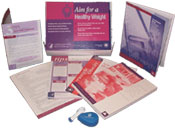 - A pocket-sized, self-retracting tape for quick waist circumference measurement
- Customizable take-away patient health and weight profile sheets complete with tips for weight loss success
- A handy Practical Guide to effectively treat overweight and obese adults that includes a quick reference tool to ACT (assess, classify and treat patients) and reproducible patient handouts on:
- Weekly Food and Activity Diary
- Sample Reduced Calorie Menus
- Food Preparation Tips
- Dining Out Tips
- Guide to Physical Activity
- A copy of the Clinical Guidelines on the Identification, Evaluation, and Treatment of Overweight and Obesity in Adults: The Evidence Report for your reference library
These kits are now available to members of the NHLBI Health Information Network in limited quantities while supplies last, at a low price of for one kit, and additional kit. Just another benefit of being a member of the HIN. To order, please visit the NHLBI Online Catalog. | | | |
Archived page, reproduced from a 2003 copy. It is reference material, not current guidance.