Cardiovascular Disease Enhanced Dissemination and Utilization Centers (EDUCs) Awardees
West Virginia Health Right, Inc.
 | 
Gregory Clarke, M.D., Spokesperson
 Video Clip: [Download the RealOne player] Video Clip: [Download the RealOne player]
Principal Investigator: Gregory Clarke, M.D.
Primary Contact: Patricia H. White, Administrator
Phone: (304) 343-7003, Ext. 11
Fax: (304) 343-7009
E-mail: healthrigh@aol.com | The Healthy Heart Project
West Virginia Health Right, Inc.
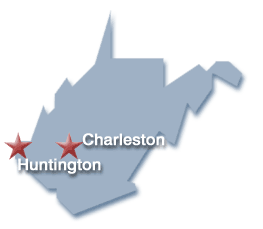
Charleston, West Virginia The project's target population includes patients attending West Virginia Health Right, a free, primary care clinic serving the uninsured and underinsured poor in south central West Virginia. This project will use a clinic-based approach to improve the cardiovascular health and quality of life of West Virginia Health Right patients. Specifically, the project will track and compare two groups—medical/behavioral treatment group vs. medical treatment only group—of Health Right patients with risk factors for heart disease. Strategies include: - Conducting screenings for cardiovascular disease (CVD) risk factors, and implementing and monitoring medical/behavioral interventions.
- Conducting educational and counseling sessions on the signs and symptoms of a heart attack and stroke with patients who have CVD risk factors.
- Developing and implementing a women's heart health program designed to increase knowledge of CVD and stroke.
The proposed strategies will focus on all four National Heart, Lung, and Blood Institute performance goals: - Prevent development of risk factors.
- Detect and treat risk factors.
- Recognize and treat acute coronary syndromes early.
- Prevent recurrence and complications of CVD.
The anticipated outcomes of this project are: Medical/behavioral treatment group (compared medical treatment only group) - Decreased number of patients with risk factors.
- Increased number of patients seeking medical treatment.
- Decreased number of patients with high blood pressure.
- Increased number of patients with controlled blood pressure.
- Increased number of patients using 911 emergency systems.
- Increased knowledge among female patients of CVD and stroke.
- Increased self-efficacy among female patients regarding taking appropriate action to prevent heart disease or stroke.
- Increased number of patients with controlled blood pressure (<140/90 mm Hg).
- Decreased use of blood pressure medication therapy.
- Increased number of patients with blood cholesterol levels less than 200 mg/dL.
- Reduced number of hospital admissions and emergency department visits for CVD events.
|
Archived page, reproduced from a 2013 copy. It is reference material, not current guidance.